
Comprehensive Guide to Services of the Leading Commercial Interior Fitout Company in Mumbai: Process and Attribution.
Commercial Interior Fitout Company in Mumbai specializes in transforming empty spaces into functional and visually appealing business environments. Whether it’s offices, retail stores, restaurants, or hospitality spaces, a well-planned commercial fitout blends design, functionality, and brand identity seamlessly. In a competitive and space-constrained city like Mumbai, expert fitout companies ensure efficient layouts, compliance with regulations, and modern design solutions that enhance productivity and customer experience. With professional execution and attention to detail, these specialists help businesses create impactful commercial spaces that reflect their brand and drive growth.
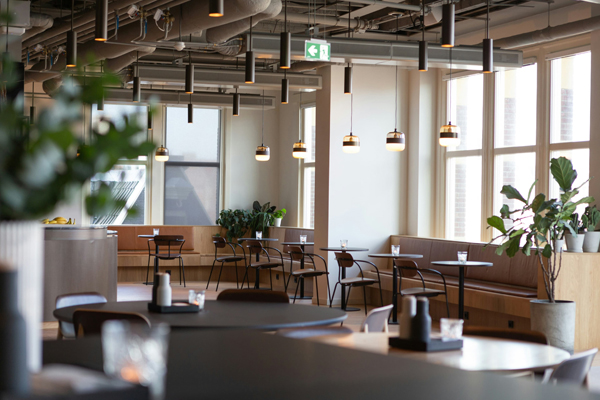
The Fit-out Process Explained
- Consultation & Requirement Analysis
This initial phase encompasses earnest discussions with the client to thoroughly analyze their precise needs, goals, and vision for the space, including both functional requirements (how the space will be used, required capacity) and aesthetic preferences, budget limitations, and timeline expectations. A thorough investigation at this stage is critical, as it sets the basis for the entire project and ensures that the completed project goes hand in hand with the business or personal objective of the client.
Site Inspection & Measurement
Once the requirements have become clear, the site gets an in-depth inspection carried out by the project team. This involves carefully measuring the spaces, surveying among existing conditions such as structural elements, access points and services that are available, and identifying possible hurdles or limitations. Accuracy in measurements is essential to make sure that no expensive discrepancies or delays occur at the implementation stage due to wrong designs or orders for materials.
- Conceptual Design & Cost Estimation
Laid down are the collected data into an initial concept design, which often includes plans, 3D images as well as first recommendations of materials. In the same breath, task estimators spend time preparing a cost estimate setting out design, materials, labor, and project management requirements vis-a-vis the proposed concept. Thus, this step gives the client a clear sense of what to expect in the end and allows negotiating the clause of what indeed is involved in design well before detailed planning on the project begins.
- Material Selection & Approvals
Materials characteristic of this phase will include specifications for major components such as flooring, lighting, and partitioning, down to details of paint colours through to hardware selections. The selected materials are presented to the client for review and approval, which might confirm that they meet the design criteria, functionality requirements, and budget. This phase is also the time when all approvals are achieved with respect to what is required by building management or local authorities from a regulatory point of view-thus keeping the project in line with all codes and standards.
- Execution (Civil, MEP, Furniture, Finishing)
This is the prime phase of construction and installation taking place, and here various specialized works are carried out. Civil works include change in structure, partitioning, and flooring, and MEP comes much later-that is, the joining or channel installation of HVAC, wiring, lighting, and sanitary-so that custom and loose furniture can be installed with finishing touches of painting, decor, and putting up signage. This phase is under strict control by the project management to achieve synchrony between different teams and to keep in the timeline.
- Quality Checks
Quality assurance checks will be carried out on works execution and completion. Those checks verify compliance of work, materials and installations to the approved design, specifications, and safety standards. Failure to comply or deviation from those above must be identified and corrected at this stage. Then it guarantees that the entire fit-out space works beneficially in terms of endurance, safety, and quality finishes.
- Handover & After-Service
This last phase includes the official handover to the client of the completed space, operationally fit for use. It includes the transfer of all requisite documentation, warranties, and operating manuals regarding installed equipment to the client. After-service or snagging follows the project closing, during which fit-out companies settle minor issues and faults that arise after occupation and ensure total satisfaction by the client and smooth transition into the new premises.
Types of Commercial Spaces Served
- Corporate Offices
Corporate offices are commercially operating spaces that serve as the center for administrative, managerial, and white-collar functions within a company. This can be an office on some small area of an option floor of a building or an entire corporate headquarters. The design of corporate offices is mainly focused on fostering an environment that is professional, collaborative, and a subtle branding exercise for the company and its culture. Key considerations would be in terms of different types of floor plans’ layouts-impact of private offices or open-plan offices, techno-structural integration, meeting rooms, and other employee amenities. Often, the focus is laid on accessibility for potential talents and clients, with such locations congregating in business districts or commercial parks.
- Retail Stores
Retail stores look after commercial properties dedicated to obtaining goods and services for the benefit of consumers directly. It is one of the most heterogeneous categories, ranging from small specialized boutiques and convenience stores running on small profit margins to large department stores and tenants of shopping malls. The overriding function of retail space is to attract and transact with customers. Therefore, design features such as store visual appeal, display areas, location for high foot traffic, and customer flow optimization are paramount. Retail spaces are typically located in sites that are easy to access and highly visible; hence, location is the primary factor dictating success.
- Restaurants & Cafes
Restaurants and cafes fall under the commercial umbrella as establishments catering to the public by preparing, serving, and selling food and beverages. These spaces are unique in that they combine a production area (the kitchen) and a consumer experience area (the dining space). Design is important for creating the desired ambience and comfort for the client since the environment is a major contributor to the dining experience. Infrastructures under consideration include commercial kitchens, ventilation systems, as well as an abundance of health and safety regulations.
- Clinics & Hospitals
Clinics and hospitals constitute a specialized subcategory of commercial space collectively termed healthcare real estate. Such establishments serve the primary function of administering medical care, treatment, and diagnostics to patients. They require complex specialized layouts that enable the efficient flow of patients, ensure privacy, and observe clinical functionality for activities, such as examination, operating, and diagnostic procedures. Among other issues, these include the need for regulatory compliance, specialized availability of infrastructure, such as HVAC systems for infection control, and the tendency to have long-term stability due to the nature of the undertaking in specialized build-outs and equipment.
- Co-working Spaces
Co-working spaces are modern kinds of commercial offices characterized by shared infrastructure and collaborative environment. Co-working spaces provide flexible workspace solutions by offering desks or private offices to individuals, freelancers, remote workers, and small teams from different companies, usually on flexible agreements, short-term contracts. Community, flexibility, and convenience are emphasized, with amenities such as high-speed internet, meeting rooms, and social areas, all included under one fee. This arrangement is attractive to those businesses that aim to keep operating costs down and be flexible without the binding commitment of a long-term agreement.
- Warehouses & Studios
Warehouses and studios belong to the industrial sector of commercial real estate, although for different purposes. Warehouses are large-scale facilities primarily used for the storage, distribution, and handling of materials and goods within the supply chain. They require features like high ceilings, loading docks, and sturdy flooring, and are generally located inside industrial parks near major transport links. Studios can refer to spaces like film production studios, art studios, or specialized fitness/yoga studios. Whatever their varietal characters, they are generally commercial spaces optimized for a particular activity or creative production.
Conclusion
These six categories show how wide the scope of commercial real estate is, with each type catered to the specific operational needs and customer interaction model of the business in question. Commercial spaces range from the opulent, brand-focused environment of a corporate office to the transaction-driven landscape of a retail store, the health-regulated intricacies of a hospital, the collaborative fitouts of a co-working space, the experience-driven layout of a restaurant, and the logistical areas of a warehouse. Commercial spaces are critical assets that facilitate different economies by providing functional and strategically located environments for almost all business activity.
CONTACT INFO
- Survey No-77, Mumbai Panvel Old Highway, Dahisar Mori, Upper Kharghar, Navi Mumbai, Thane – 400612, Maharashtra, India
- Phone: +91 7977211058
- Mobile: +91 7021275001
- Email: info@gmam.in | gmamfurniture@gmail.com